Attention: men who know exactly what they should be doing, and keep watching themselves not do it.
How to finally rewire a habit you've already quit a hundred times
Without willpower. Without a streak counter. And without another 30-day "detox" that leaves you exactly where you started by week two.
Look. You have never lost to your lower self in a fair fight. Not once. The fight gets handed over before it starts. Five conditions decide who's driving at 11pm, and you've been hammering away at one of them. Probably the wrong one.
Even if you've relapsed a hundred times. Even if you did 90 clean days and watched them vanish over one bad weekend. Even if you've privately decided, by now, that you were just built weak.
For men with a habit they've already tried to stop — the phone, the porn, the bets, the weed, the late-night eating, the doom-scroll. It's the same mechanism underneath all of them.
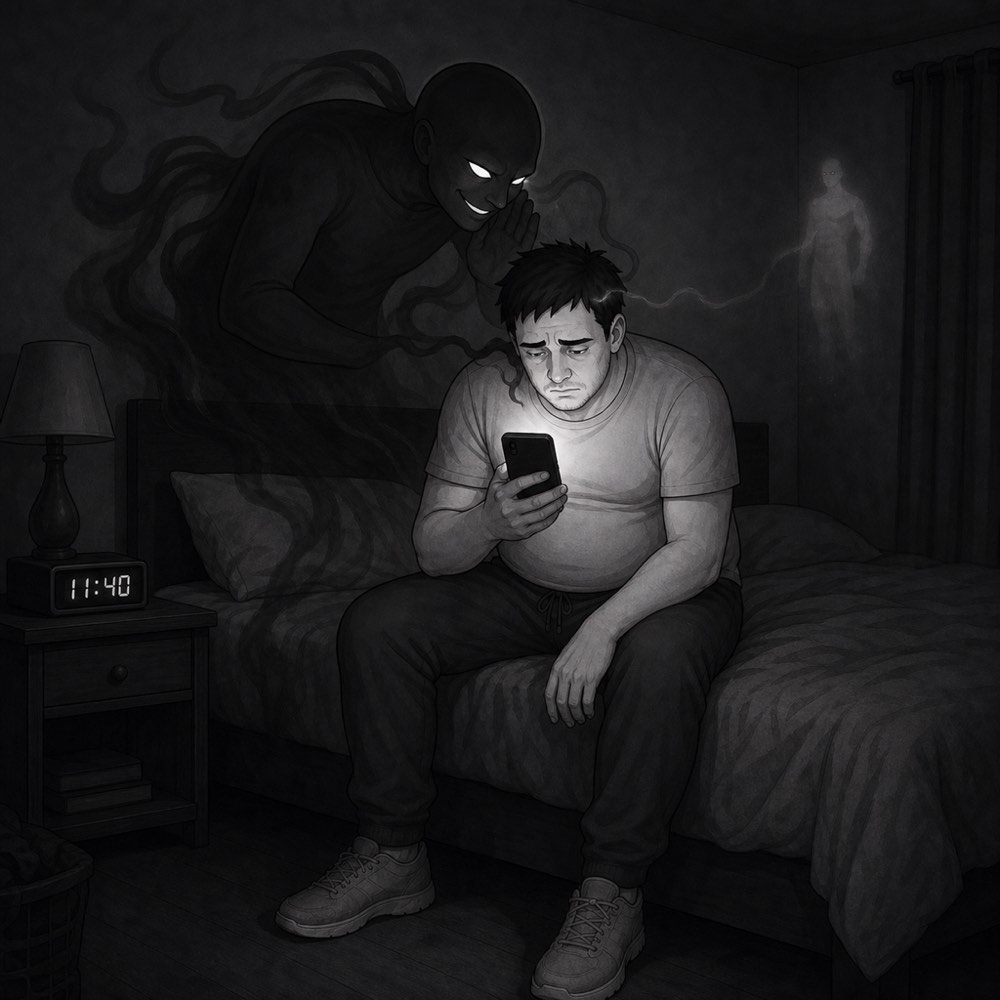
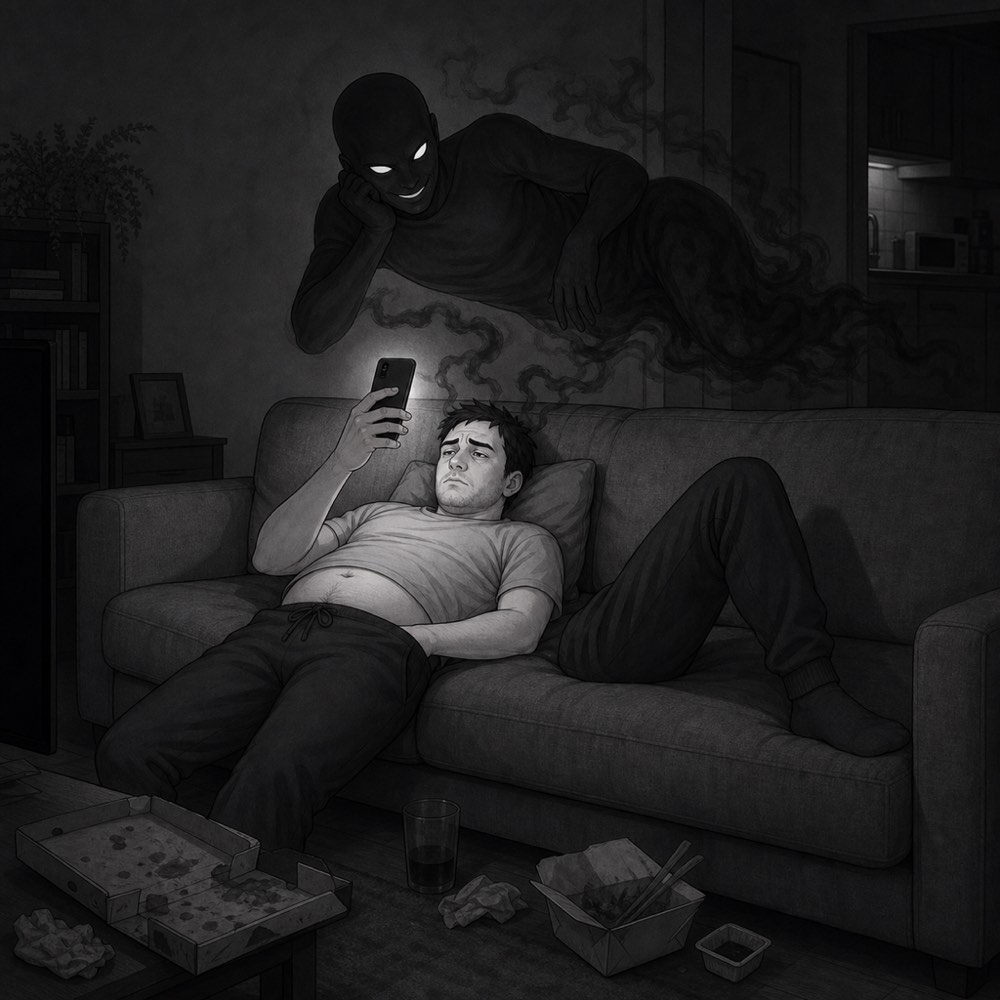
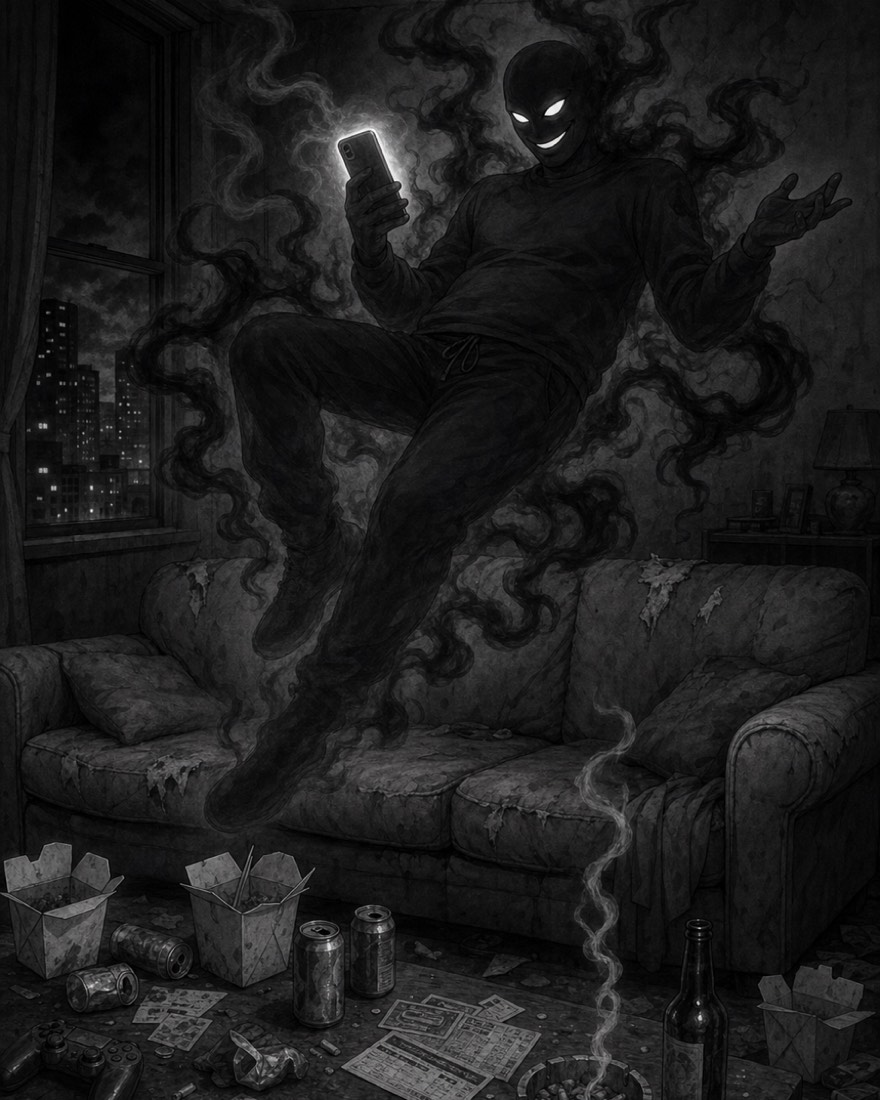
Let me tell you about your 11:40pm.
You're in the dark. Phone on your chest.
And you've already had the argument. You made the case. You won it. You decided.
Not tonight.
Then your thumb moves.
No struggle. No big dramatic battle where you wrestle with it and lose.
It just happens. Like scratching your face.
Then that sound comes on. You know the one. Those two notes.
And you turn the volume down FAST. Even though there's nobody else in the house.
Now here's what I want you to notice about that.
You didn't lose a fight. You weren't even AT the fight.
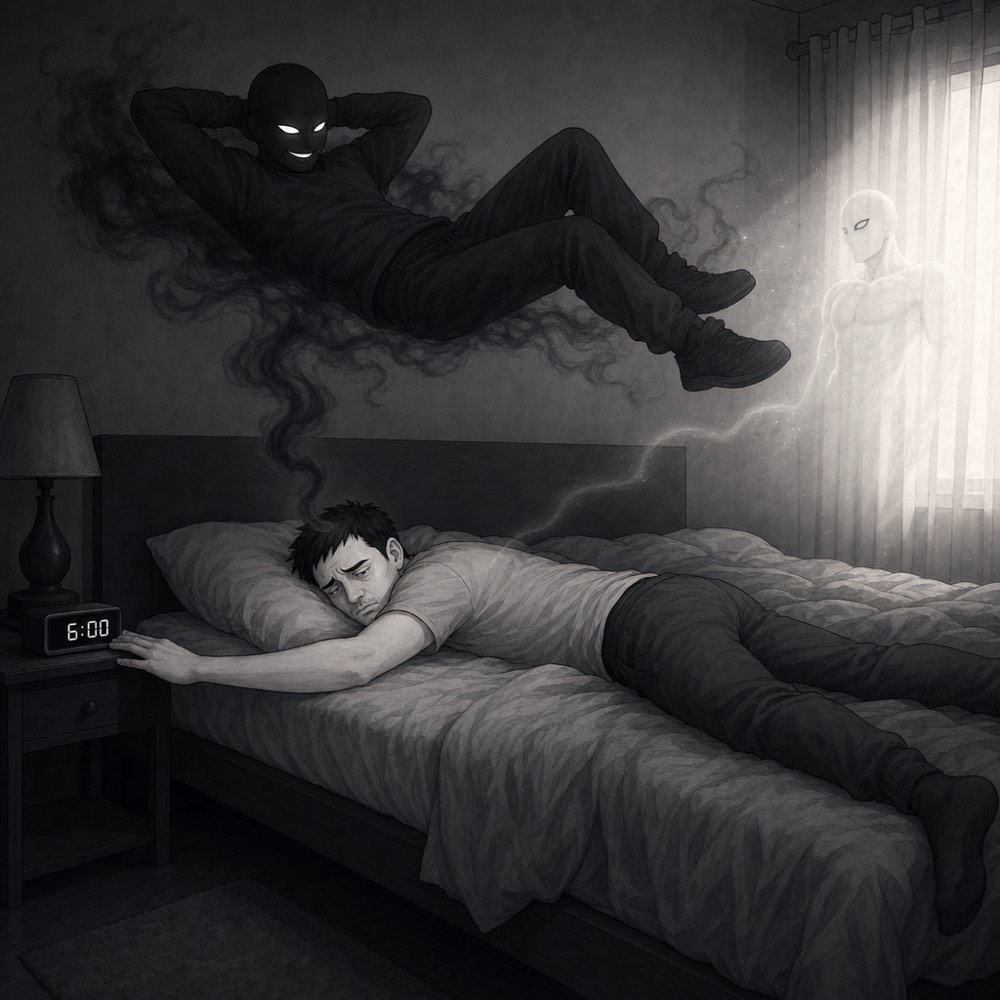
Same thing in the morning, isn't it.
You set the alarm for six. And you MEANT it. Last night on the edge of the bed, six wasn't just possible. It was obvious. You could see the whole day.
Six comes. And that bloke is gone.
The one holding the phone turns it off like he's never made a promise in his life. No debate. No wrestling. Off.
You wake up at 8:20 and the day's already shaped and you didn't pick the shape.
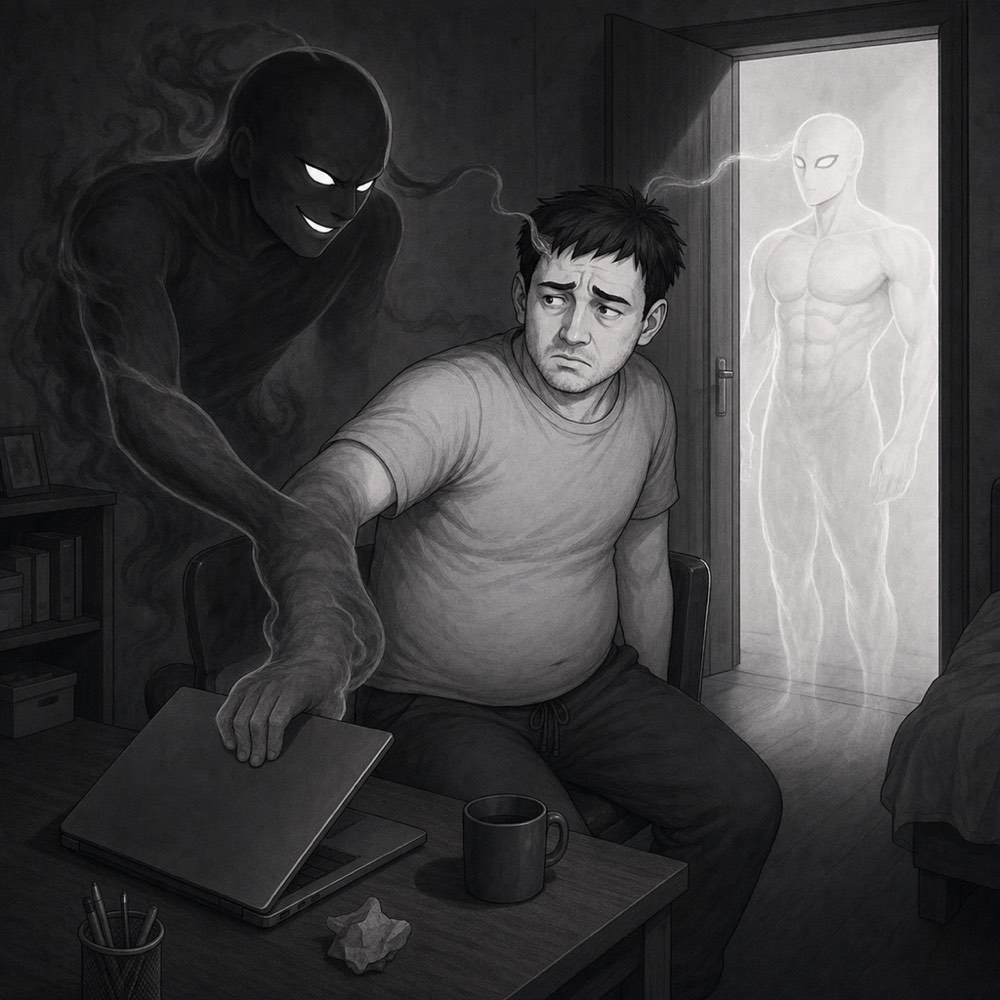
But the one that actually gets you is quieter than both of those.
You clear the history.
You've got a story ready that nobody asked for.
And one day you catch yourself closing the tab before you walk into the kitchen. Casual. Smooth. Like admin.
He's been stood in that doorway the whole time.
And it hits you:
I'm not stopping this. I'm managing it.
That one doesn't sting like the others. It's colder than that.
And you've been carrying it around a while now. Haven't you.
None of that is a character defect. It's a mechanism, and it runs on conditions you were never taught to see. And there are two ways men end up on this page — you're one of them.
If you've broken it before
You did the 90 days. Then one bad week wiped them.
This is the one that haunts you, because you've MET that version of yourself.
Sixty days. Ninety. A proper reboot — hard mode, the lot. Sharp, level, your word actually meant something. You remember what that felt like.
Then a bad month at work. Or a breakup. Or one night away from home.
And it's like the 90 days never happened.
So you decided it was a fluke. That the real you is the one who folded.
Wrong. Here's what actually happened.
Those 90 days never deleted anything. They couldn't. Your brain doesn't wipe the old pattern when you stop — the original sits there fully intact and you build a NEW competing layer on top of it.
That's all a clean run is. A new layer.
And under stress, or back in the old room, the brain drops to the older one. Every time.
You weren't kidding yourself. You just didn't know the old one was still down there. Nobody told you.
If you've never got past week two
You've started a hundred day-ones. None of them saw a Friday.
The apps. The blockers. The accountability partner you ghosted. The cold showers that lasted nine days.
You've read the books. You can recite this stuff better than the people selling it.
And not one attempt has ever reached week three.
So at some point you stopped blaming the methods. And started blaming you.
Let me tell you what was actually going on.
Every one of those attempts was made from the wrong position.
Stressed. Under-slept. Sat in the same chair, at the same hour, with the trigger already fired.
You'd already handed the wheel over. And THEN you tried to steer.
That's not weak willpower. That's a bloke shouting instructions at a car he's not sitting in.
Now let me get you off a hook you've been hanging on for years.
Nobody ever taught you how to be uncomfortable.
Think about it. Was that ever a subject?
You got taught to get the grades. Then the degree. Then the job. And every one of those was the same lesson: push the bad feeling down and keep going.
So you got good at it. Brilliant at it, actually.
But nobody told you where the feeling GOES. And it goes somewhere. It always goes somewhere.
So every time life got heavy there was something in arm's reach that shut it up for twenty minutes.
The tab. The bet. The bag. The fridge. The feed.
Twenty minutes. That was the deal. It was never twenty minutes.
And every mate you had was doing his own version of the exact same thing. So nobody in that room was ever going to name it.
Now here's the bit nobody will say to your face.
Every habit you've got WORKED.
The porn solved being alone. The scroll solved being bored. The bets solved feeling small. The food solved the day you'd just had.
They weren't stupid. They weren't weak. They were solutions. Good ones. That's exactly why they stuck — your brain keeps whatever pays.
So no, you haven't got a discipline problem. You've got solutions that outlived the problems they solved.
That's the whole diagnosis. One way to put a bad feeling down. Nobody ever gave you a second one.
Two completely different histories. Same mechanism underneath. And both of you ended up at the same sentence:
"There must be something wrong with me."
There isn't. You're both wrong in exactly the same way.
Control gets handed over before you get a vote. And that handover runs on five conditions.
Leave one of them unmanaged and it routes straight around everything else you're doing. Doesn't matter how badly you want it.
That's not a theory about why you failed. That's the mechanism. It's why the 90 days came undone. It's why every Monday dies on a Wednesday.
You've spent years trying to win the fight. I'm going to show you how to stop it being scheduled.
But before I show you the five, let me show you what they're for.
What you're actually here for
It isn't about the habit.
You didn't come here to stop doing a thing. You came here because of what it costs you to be a man who can't stop doing a thing. So let's talk about the actual prize, because nobody ever does.
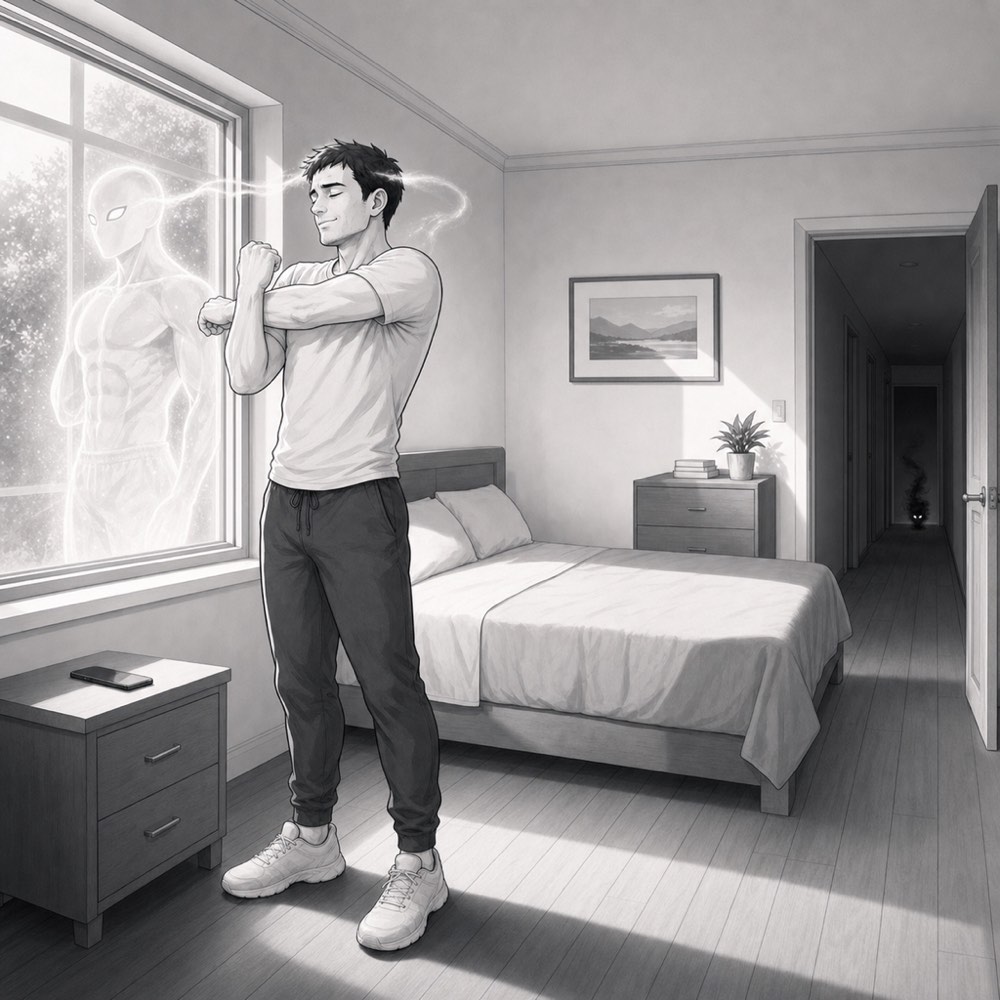
You wake up and you don't reach for it. Not because you fought — because the thought doesn't have the same pull it used to. There's a strange, roomy quiet in the first ten minutes of the day where the scrolling used to be, and you sit in it, and it's yours.
The lower self doesn't die. He just stops getting a vote.
And then it starts turning up in places you'd stopped expecting anything from.
The gym stops being a decision. That's the one nobody believes until it happens. It isn't that you find the motivation. It's that the argument disappears. It's Tuesday, so you go. And your body starts changing as a side effect of something that was never really about your body.
You get bored and you don't reach. You're in a queue, or a waiting room, or ten minutes early somewhere, and you just stand there. Nothing in your hand. And it's fine. That is the one that will surprise you. Most of your day, it turns out, was you running from a feeling that lasts ninety seconds and was never dangerous.
And you stop lying. That's the big one and it's the one men never say out loud. No cleared history. No closing the tab before someone walks in. No small, greasy story kept loaded in the chamber for a question nobody's going to ask. You just have nothing to manage. You cannot imagine, from where you're sitting right now, how much energy that's been eating.
This is the version of you that's been in there the whole time.
People start treating you differently and you won't be able to point to why. You'll assume it's confidence. It isn't. It's that your word means something again. First to you. Then to everyone else.
That's the actual prize. Not "beating" anything. Just being the one who decides. Reliably. Boringly. On a Tuesday, without a fight.
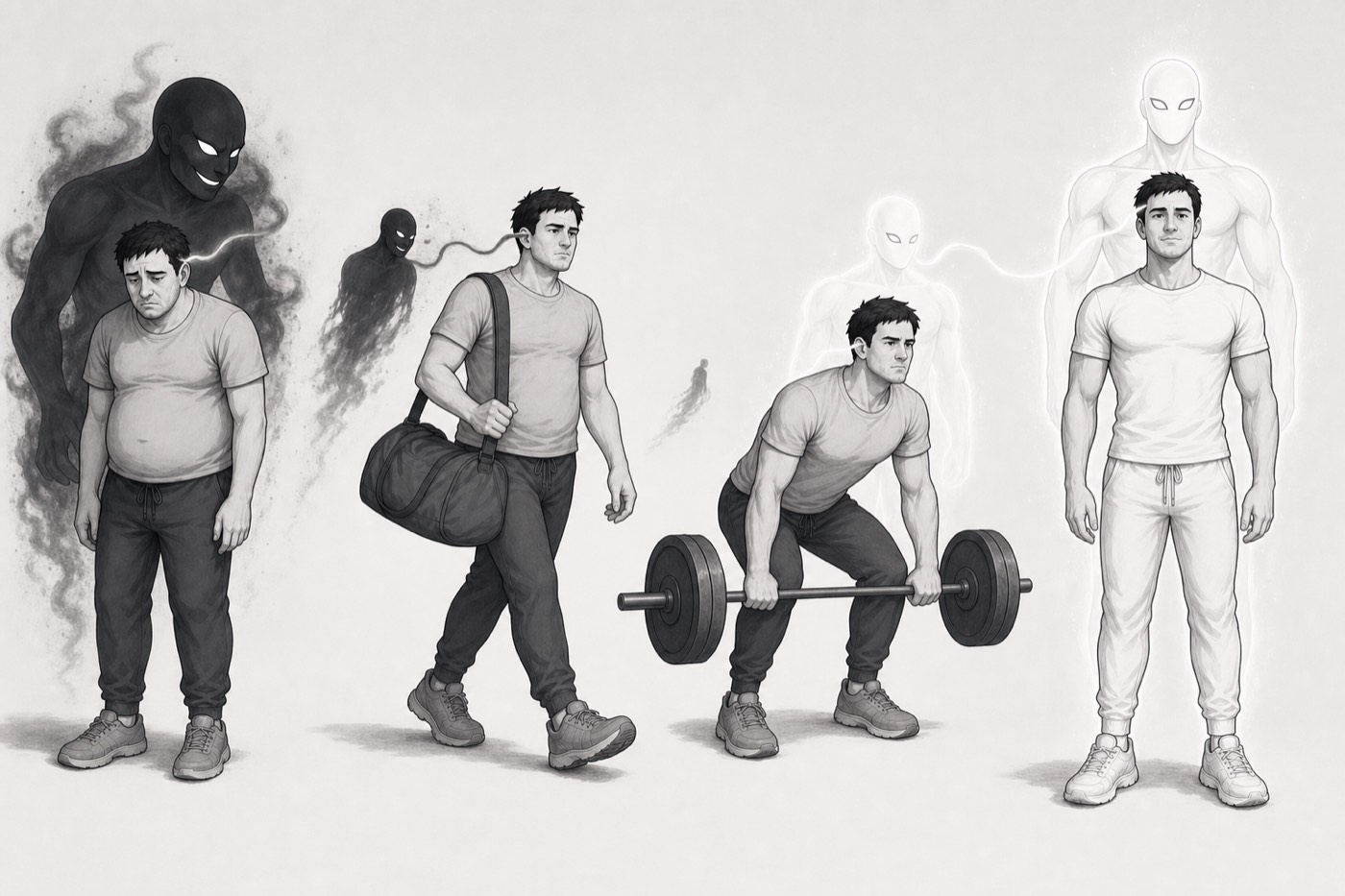
Same man, start to finish. Nobody swapped him out. Only the conditions changed.
One honest catch, and I'd rather you heard it from me than found it out on day nine.
That man is not waiting on the other side of thirty days like a prize you collect. He gets built out of evidence, and evidence only comes from doing. You cannot think your way into him. You cannot affirm your way into him. The research keeps landing in the same place: identity locks in after repeated action, not before it. And action taken in the wrong conditions doesn't count as evidence. It just becomes another day one you failed.
That's the whole game: set the conditions, then act, so the action lands. Do that and the identity builds itself. And once it's built, it starts paying the bill you've been paying with willpower this entire time.
And here's the part I'll put a number on
30 days. And by day 14, the first one you watch go past.
30
days to set all five conditions
One instruction a day, in your inbox. Nothing to work out, nothing to decide.
14
the day you sit through a full urge
The cue arrives, the pull builds, it crests. Then it leaves without you touching it. You'll clock the moment it happens.
0
slips that reset your progress
Zero. Not a pep talk — a mechanism. The new layer doesn't get deleted by one bad night, and I'll show you why.
Why day 14, and not "you'll be free"? Because that's the first thing you can watch with your own eyes instead of taking my word for it. An urge that arrives and then leaves on its own, while you sit there, is direct evidence the conditions have changed. The old you never saw the end of one. You always intervened before the credits.
And why does no slip reset it? Because that's how the biology works, and the streak counter on your phone has been lying to you about it. Stopping a behaviour doesn't erase the old pattern. It builds a new competing layer on top of one that stays intact underneath. Which cuts both ways. It's why a bad week can bring the old thing back at full strength. And it's why one bad night cannot delete a layer you spent three weeks building.
Day 61 after a slip on day 60 is day 61. The counter going back to zero is a user-interface decision made by an app developer. It is not a fact about your brain. It has ended more attempts than the slips ever did.
Thirty days to set the conditions. Day fourteen to see it working. And no single night that can take it off you.
The 10 things you're doing that are keeping the loop alive
Everyone hands you a list of things to start. Here's the list nobody gives you — and every single one of these was sold to you by somebody.
Don't do the 7-day detox everyone sells. Cutting the stimulus is right. The 7 days is the lie. The sensitivity you're trying to get back moves in weeks to months, so you quit a working method on a broken clock.
Don't rely on a streak counter. It's built on a false model of how your brain stores this, and it turns one ordinary night into a reason to abandon three good weeks.
Don't try to out-willpower a cue. By the time you're stood in front of it, the outcome was decided upstream. That fight has never once been won where you keep trying to win it.
Don't start when you're stressed and under-slept. This is the single most common way it fails. There's a physiological reason, and it's not a small effect.
Don't just remove the habit. It was doing a job. Take it out and leave the job unfilled, and the vacancy gets filled — usually by something you'll like even less.
Don't rely on blockers and app timers alone. They manage a symptom at the very last second of a chain that started hours earlier. Useful. Nowhere near sufficient.
Don't wait to feel ready. Motivation follows the action here, not the other way round, and waiting is the one move that's guaranteed to feed the pattern.
Don't tell yourself you'll cut down. For a cued habit that's the worst of both — you keep the cue live and lose the one thing that actually rewrites it.
Don't work on your mindset before your nervous system. You're trying to renovate the top floor while the foundations are moving. It's the wrong order and it's why nothing holds.
Don't call yourself an addict if you aren't one. It sounds like honesty. It functions as an identity — and identity is the single strongest predictor of whether the behaviour continues.
Every one of those has a mechanism behind it, and every mechanism has a citation. That's "Why It Always Comes Back" — all ten, with the study behind each, so you can check the lot yourself. It's included.
Deciding at 11pm, in the dark, with the thing already in your hand
Starting again on Monday, for the ninth time this year
A streak counter that turns one bad night into a total write-off
Detoxes and resets built on a mechanism that doesn't exist
Managing it — the cleared history, the closed tab, the story kept ready
Reading another book about discipline and changing nothing
Privately believing that everyone else got issued something you didn't
Say hello to
Knowing which of the five conditions is stuck on you — and the order to fix them in
Cancelling the fight instead of trying to win it
Watching a craving arrive, crest and leave while you sit still
A slip that costs you a day instead of a whole attempt
Doing the thing on a Tuesday with no argument attached to it
Nothing to hide, nothing to manage, nothing loaded in the chamber
The half nobody sells you: it holding under stress
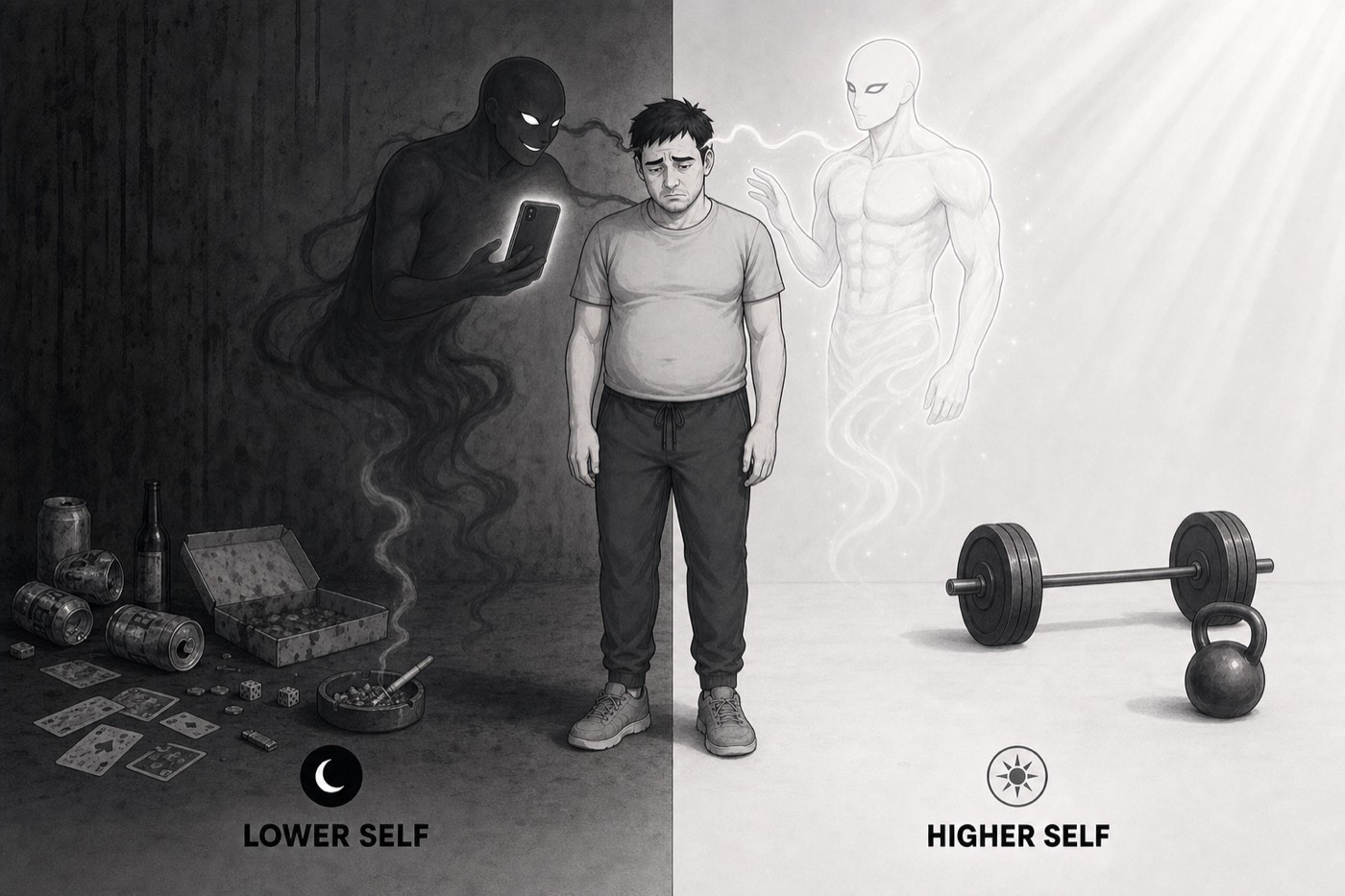
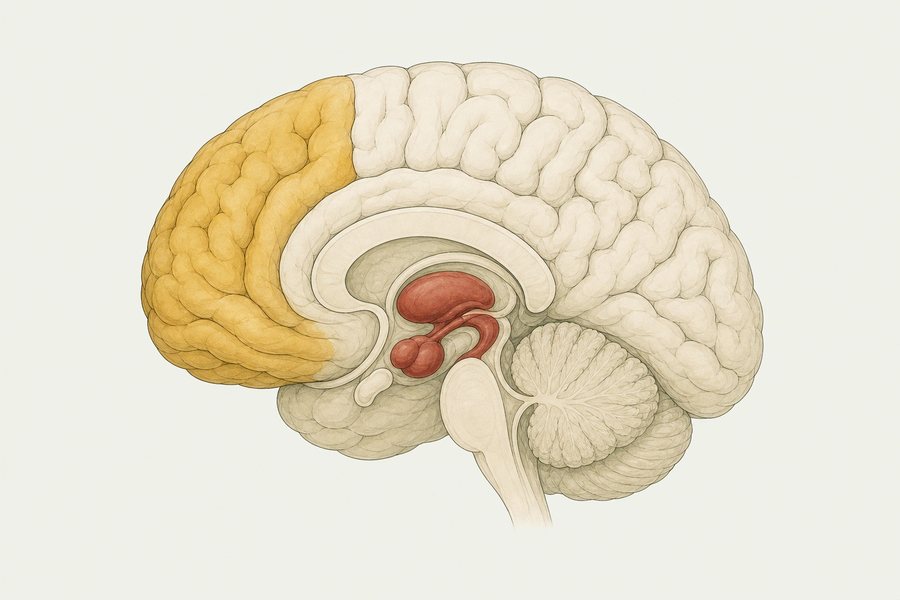
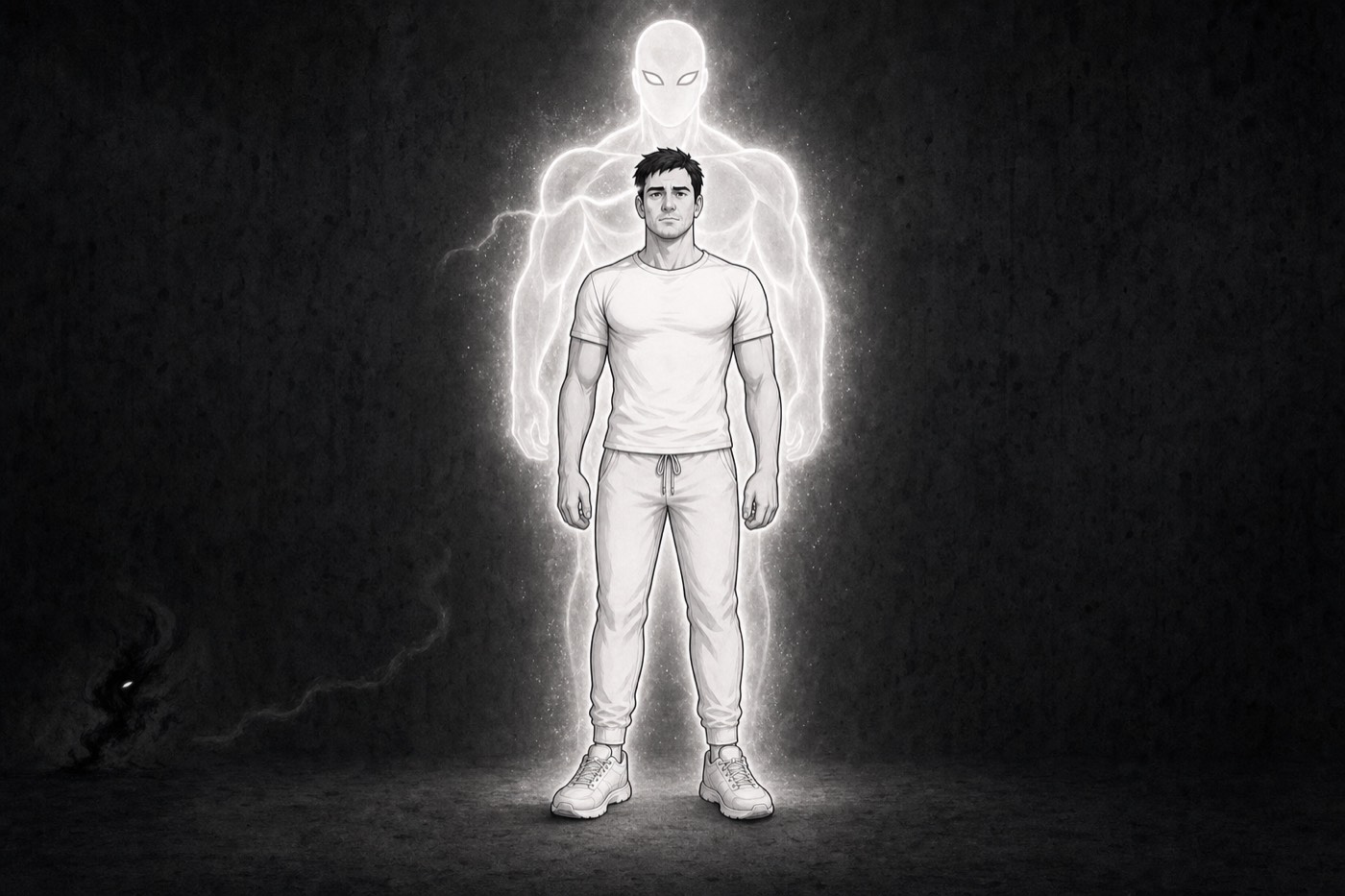
Your higher self isn't a metaphor.
It has an address. And so does the thing you keep losing to.
Gold: the prefrontal cortex. Plans, values, the long horizon.
·
Red: the amygdala and basal ganglia. Threat, and the stored script.
☀
The Higher Self
Prefrontal cortex. Plans, values, consequences, the long horizon. It exerts top-down control over the reward and threat systems below it. This is the one that set the alarm.
☾
The Lower Self
Amygdala + basal ganglia. Threat detection and the stored script. Fast, tireless, older, completely uninterested in next year. This is the one that turned the alarm off.
⇄
The Handover
Not a fight — a transfer. Under the wrong conditions, control passes from the top to the bottom. You don't feel it happen. You only see the result.
✎
The Rewrite
Prediction error. The only signal that updates the script. Not insight, not resolve, not understanding. Lived mismatch, and nothing else.
Here's the part nobody tells you
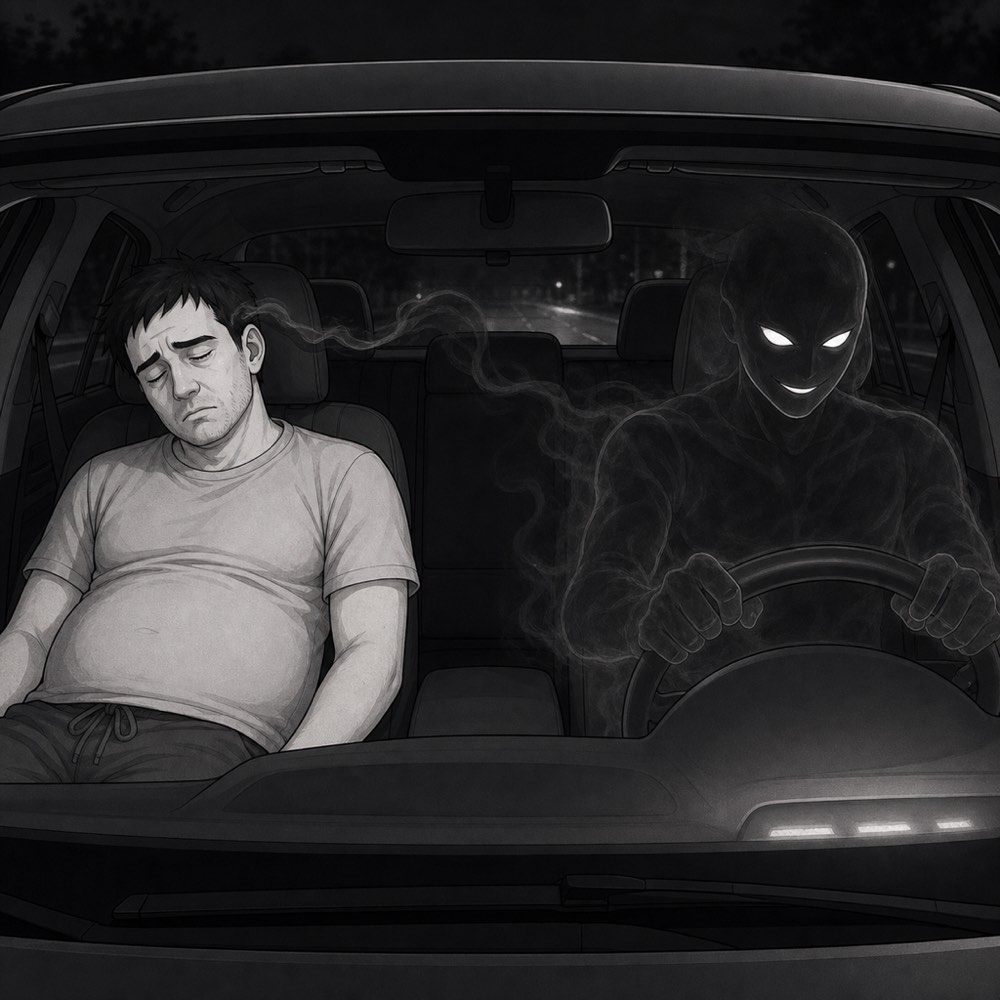
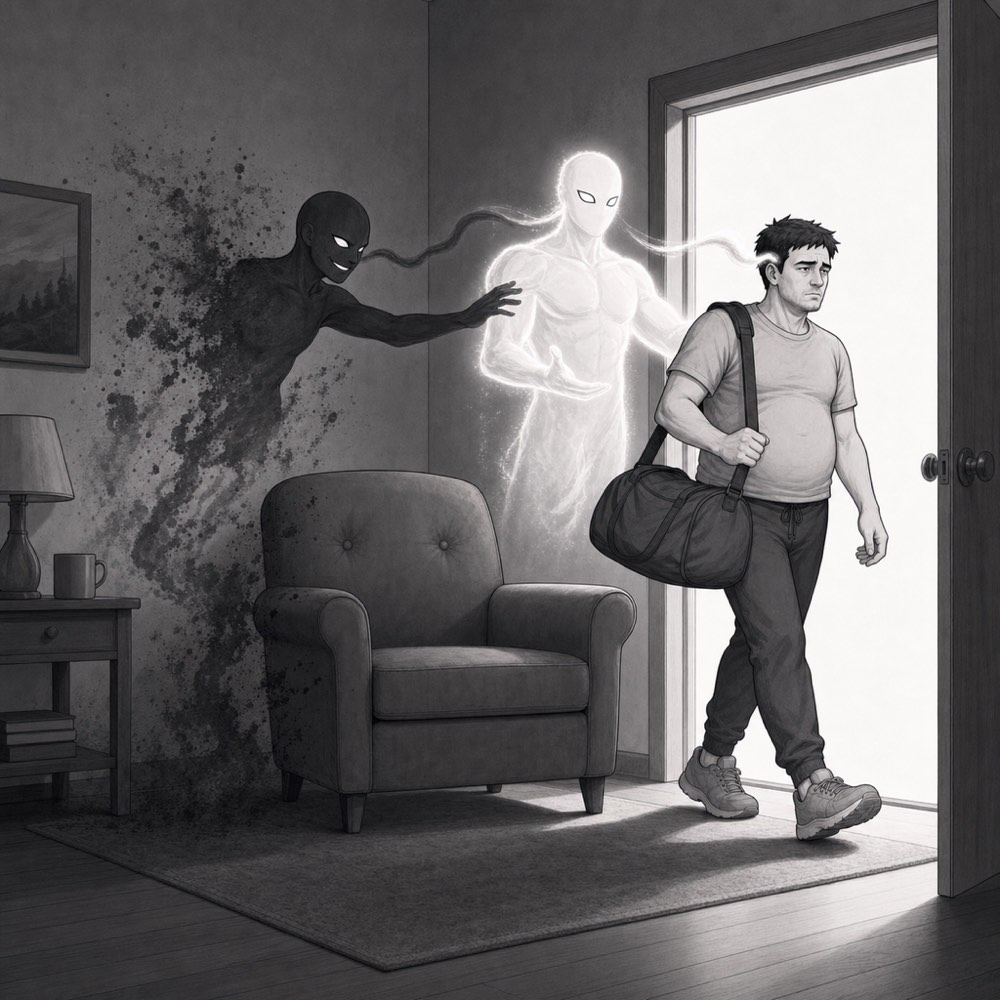
This is the whole thing, in one picture. Nobody fought. He just took the wheel.
Stress doesn't just make you feel like giving in. It performs the handover. High stress does two things at once: it activates the amygdala, and it reduces prefrontal control over behaviour. Both ends. Simultaneously. The documented result is a shift out of goal-directed behaviour and into habitual behaviour. The stored script runs, because the thing that overrides it has been turned down.
Read that again. You were not weak at 11pm. You were not in the room at 11pm. The system that decides on behalf of your future had its volume turned down by your own physiology, hours earlier. The script took the wheel exactly as it was built to.
Which means the fight was never the problem. The handover is the problem. And unlike willpower, the handover runs on conditions you can actually set.
Know them both
The two men in your head.
You've lived with both of them since you were a boy. Nobody ever introduced you.
☾ The Lower Self
The one who runs your evenings
Lives for the exit: the tab, the bet, the bag, the feed
Spends your tomorrows on tonight
Strongest when you're tired, stressed or alone
Keeps every promise for nine days
His whole pitch, every time: "you've earned this"
He isn't evil. He's ancient. He solves discomfort with escape, and he is very good at his job. Look at the state of him. That's where his plan for you ends.
☀ The Higher Self
The one you're building toward
Fit. The body is a receipt for a kept word, not a flex
6am means 6am. His word holds weight — with himself first
Calm under pressure. Stress doesn't hand him over
Trains, builds, banks. Standards that compound
Walks into a room and people feel it before he speaks
He isn't a different man, and he isn't a fantasy. He's you, with the conditions set and the evidence banked. Every day of the Protocol is a brick in his direction.
Every hour of your day, one of these two is holding the wheel. Not the one you prefer. The one whose conditions are set. That is the entire game, and it's why the five conditions exist.
Meet the five
Five conditions decide who's holding the wheel.
You've been working on one of them. Almost certainly the wrong one, and almost certainly out of order.
CONDITION 01
The Anchor
IDENTITY LOCK
Become the man who doesn't go back. Identity is what holds the change after the thirty days.
CONDITION 02
The Baseline
DOPAMINE MASTERY
Reset what your brain calls "normal" so ordinary life feels good again — and the habit loses its pull.
CONDITION 03
The Battlefield
TRIGGER CONTROL
Find and kill the cues that fire the habit — the chair, the hour, the phone in reach — before you get a vote.
CONDITION 04
The Rewrite
NEUROPLASTIC ACTION
Rewire the habit with action your brain can't ignore — the only thing that actually writes a new script.
CONDITION 05
The State
NERVOUS SYSTEM COMMAND
Stop losing to stress. Calm the system that hands control away — or none of the other four are reachable.
And they have to be set in a specific order. Nearly every man who tries this starts at number four — action — while three and five are unmanaged. He attempts the rewrite standing in the middle of the battlefield, sympathetically dominant, at eleven at night. That attempt fails, and then he files the failure as evidence about himself. The order is inside.
What's actually happening in there
Five conditions. Here's what each one actually is.
Not what to do about them — that's the guides. This is just what they are, so you can see why nothing you've tried has touched them.
Condition 01 · The Anchor · Identity Lock
Identity isn't motivation. It's a subsidy.
You've been told to "become the kind of man who." Nobody told you what that actually does. A settled identity doesn't make you want it more. It pre-makes the decision, so you stop paying for it. In the research it shows up as a lower executive-function load: the same behaviour costs less control to produce, because it's not being re-decided every night. That's the whole mechanism. Not fire. Subsidy.
And it gets sold to you backwards. Identity is not a starting gun. The studies keep finding the same order: it locks in after repeated action, not before it. You cannot affirm your way in. Every man who's stood in a mirror telling himself who he is already knows this.
So it's a loop, and you enter it in the right place. Claim it, then feed it evidence. Once it's fed, it starts paying the bill you've been paying with willpower.
Which is exactly why it gets set last and matters longest. Anyone selling identity as step one is selling you half a mechanism.
Condition 02 · The Baseline · Dopamine Mastery
The dopamine detox is not a real thing
I'm going to cost myself some credibility with half the internet here, and I'd rather do that than sell you the same lie again. There is no evidence a dopamine detox lowers dopamine, resets receptors, or restores anything. It rests on a model of dopamine that's simply wrong.
Dopamine is not a fuel tank. It's a prediction signal. This is Schultz's finding and it's about as settled as neuroscience gets. Dopamine fires above baseline when life comes in better than predicted. Flat when it's as predicted. And it dips below when it's worse than predicted. It isn't measuring pleasure. It's measuring the gap between forecast and delivery.
Which tells you what the over-stimulation actually did. Porn, the feed, the bets, engineered food. None of them drained anything. They raised what your brain now predicts as normal. So ordinary life — a book, a conversation, a Tuesday — comes in under forecast. That dip is the flatline. The restlessness. That low itch behind the eyes at 9pm.
You were never chasing the high. You've been escaping the dip. Which makes it a learning problem to be re-taught. Not a tank to be refilled.
That one distinction is why detoxes fail and this doesn't. You don't drain it. You change what it forecasts.
Condition 03 · The Battlefield · Trigger Control
The fight has never once been won where you keep trying to win it
Habits are triggered by cues, not by desire. That sounds academic until you see what it means: the lower self does not need you to say yes. It only needs you to be present at the trigger.
The cleanest demonstration is a study of students transferring to a new university. Their habits — exercise, reading, television — survived the move only where the context stayed the same. Change the context and the habit stopped firing. And with the cues gone, behaviour returned to intentional control. The higher self got the wheel back. Not through effort. Through an absence.
You've been fighting at 11pm, in the chair, with the phone in your hand. That fight was decided upstream. By the chair, the hour, the phone in reach, and a day that left nothing in the tank.
You're not building the strength to win it at 11pm. You're making sure it never gets scheduled for 11pm. Different projects. Only one of them has ever worked.
He's not beaten. He's just stood next to a chair nobody sat in.
Condition 04 · The Rewrite · Neuroplastic Action
Stopping doesn't delete it. Nothing does.
This one should make you angry, because it means every clean run you've ever done counted. And nobody told you what it was building.
When you stop a behaviour, your brain does not erase the old association. Extinction is not deletion. It's a new, competing layer laid on top of one that stays fully intact underneath. That's why stress, or the old context, can bring it back at what feels like full strength. As if the ninety days never happened.
Now point the same fact the other way, because this is where it becomes yours. A slip doesn't delete the new layer either. The streak counter has been lying to you. Three weeks of new learning is not undone by one Tuesday night. What ends attempts is the man deciding the slip erased everything, and walking away from something that was still standing.
So what writes the new layer? One thing: a violated prediction. Doing the thing your script says you don't do. Insight doesn't write it. Reading this page doesn't write it. Only lived mismatch.
Which is why action isn't the reward for having changed. Action is the only currency that buys the change.
Condition 05 · The State · Nervous System Command
You weren't weak at 11pm. You were sympathetic at 11pm.
Self-control isn't purely a virtue. It's physiology, and it can be measured. Your prefrontal cortex and your heart sit on the same circuit, wired in both directions. Heart-rate variability tracks the inhibitory grip of that circuit — the anatomical route the higher self uses to hold the lower one down. Resting HRV predicts measured self-control. That's a meta-analysis, not a wellness blog.
Now put that beside the handover. Stress raises amygdala activity and cuts prefrontal control in the same moment, and behaviour shifts from goal-directed to habitual. Chronic sympathetic dominance isn't "feeling a bit stressed." It is the condition under which you are not the one driving.
You've spent years trying to be a stronger man at 11pm. The move was never to be stronger then. It was to not arrive there sympathetic.
This is why it's set first. Every other condition on this list is unreachable from a nervous system that's already handed over.
The one nobody counts
One bad night cuts the wire
You think sleep is recovery. It's the wire. And it's the cheapest, most ignored item on this page by a distance.
One night of sleep deprivation produced roughly 60% greater amygdala reactivity to negative stimuli — and, in the same study, a loss of functional connectivity between the medial prefrontal cortex and the amygdala. The alarm gets 60% louder, and the wire to the only structure that can turn it off goes slack. Both, from one night. That's the handover, caught on an fMRI scanner.
Count how many of your own relapses followed a bad night, a late flight, a newborn, a deadline. It isn't a coincidence, and it was never a character trait.
That's what they are. Not one word of what to do about them.
And you can probably already feel the problem: they're wired to each other. State gates everything. The Battlefield decides whether State ever gets tested. The Baseline decides how loud the pull is when it does. The Rewrite is the only thing that changes the script, and it only counts if the first three are set. And the Anchor locks in last, out of the evidence the other four produce.
Which means there's an order — and it isn't the one you'd guess. Nearly every man starts at the Rewrite, because action feels like the honest place to start. Doing it in that position is what has failed you, repeatedly, and it's what turned into evidence about your character. Nobody has written that order down. That's what you're buying.
Every mechanism above is cited in the guides — Schultz on prediction error, Wood on context and habit disruption, the prefrontal–amygdala disconnect under sleep deprivation, the HRV self-control meta-analysis, all of it. If we can't cite it, we don't sell it.
It's the most reasonable-looking mistake in self-improvement, and it's the one that's been costing you years.
Action feels like the honest place to begin. It looks like effort, it's what everyone praises, and it really is the only thing that rewrites the script. So you start there. You just start there while stood in the middle of the battlefield, sympathetically dominant, on five hours' sleep, at eleven at night.
And it doesn't work. Of course it doesn't. But here's the expensive part: it doesn't fail for free. Every attempt made in the wrong conditions gets filed as data about you. Not about the conditions. About your character. Do that six or seven times and you have built a very well-evidenced case that you're a man who can't follow through.
The order isn't a productivity tip. It's the difference between action that counts as evidence and action that becomes ammunition against you.
05 State→
03 Battlefield→
02 Baseline→
04 Rewrite→
01 Anchor
Take the wheel back. Clear the ground. Lower what's being forecast. Then spend the action, where it now lands as evidence instead of ammunition. And the Anchor sets last, because identity locks in after the reps, not before them.
Same five things you were already half-doing. A completely different sequence. That sequence is the product.
The bit you already tried
Discipline is real. It's just not a strategy.
You've done the white-knuckle version. You know you have. The blocker on the router, the phone in the drawer, the deal you made with yourself on a Sunday night that felt different this time. And it worked. For nine days. Then there was a Wednesday you can barely remember, and by Thursday the arrangement had dissolved and neither of you mentioned it again.
Here's what nobody tells you about that. Discipline is real. It exists, it's trainable, and the men who hold onto this long-term all have some. Anyone telling you that you can arrange your life so cleverly that you never need any is selling you the next disappointment. That's true, and I'm not going to pretend otherwise.
But discipline is a resource, not a plan. And it does not sit still. It runs off the same prefrontal capacity that stress suppresses, that a bad night disconnects, and that gets drawn down by every decision you've already made that day. The amount you have at 11pm is not the amount you had when you made the promise at 9am. It was never the same number. You've just been budgeting as though it was.
So the plan that looked completely achievable on Sunday isn't the same plan by Wednesday night — same man, same intention, a fraction of the capacity. You didn't go back on your word. The account was empty when the bill came in. And because you can't see the balance, you read the decline as a statement about your character.
That's the entire job of the five conditions. They don't get you out of needing discipline — nothing does. They lower the price of the decision until what you've got covers it.
Set the State and you arrive with more in the account. Set the Battlefield and the bill never gets issued. Set the Baseline and the pull costs less to refuse. Spend the Rewrite and the script itself starts changing. Set the Anchor and the decision stops being re-taken every single time. Five levers, all of them acting on price rather than on willpower.
Keep your discipline. You'll need some. But stop trying to buy a $500 decision with $5 of prefrontal capacity at eleven o'clock at night, and then concluding you're a weak man when the card gets declined.
Sources for the capacity claims are in the guides — the stress-induced shift from goal-directed to habitual control, the prefrontal–amygdala disconnect after sleep deprivation, and the HRV self-control meta-analysis. If we can't cite it, we don't sell it.
Before you spend a penny — four admissions.
I'm not a doctor or a therapist, and this isn't medical advice — it's a mechanism, explained, with the studies stapled to it. A professional is who you check it against, not who wrote it. And if what you're dealing with is genuine addiction — if it's threatening your health, your income or your family — you want a human being, not a $19 download. Go and get one. I'd rather say that than take your money.
Some of the strongest receptor evidence comes from drug studies, and I'm not going to blur that line. The measured recovery curves, the ones running to twelve and seventeen months, are from substance research. The behavioural side shows similar reward-system involvement, but the causality is unresolved. Anyone quoting you an exact dopamine-recovery timeline for a phone habit is making it up. The Protocol doesn't rest on receptor counts. It rests on prediction, cues, state and plasticity. Which is exactly why it doesn't need a timeline nobody has.
There's no 30-day cure in here, and no version of this where you're finished. The old pattern doesn't get deleted, by me or anyone else — it gets outcompeted by a new layer that you maintain. If you want the thing that makes it permanently, effortlessly gone by next Friday, close this tab. That promise is the one that's already failed you, more than once, and I'm not going to be the next man to make it.
And it will not work if you don't do it. The Rewrite condition is the entire engine, and it is bought with lived mismatch — meaning you actually have to go and do the uncomfortable thing while the conditions are set. Ten minutes a day for thirty days, mostly things you're already doing, in a different order at a different hour. If ten minutes is too much, keep your $19. I mean that.
Everything else on this page I'll stand behind — because every claim on it is cited, and the ones I couldn't cite, I cut. That's the whole deal. So here's exactly what you get for your nineteen dollars.
The whole thing · $19
What's inside
Five guides. One per condition, plus the one that explains why it always came back.
Guide 01
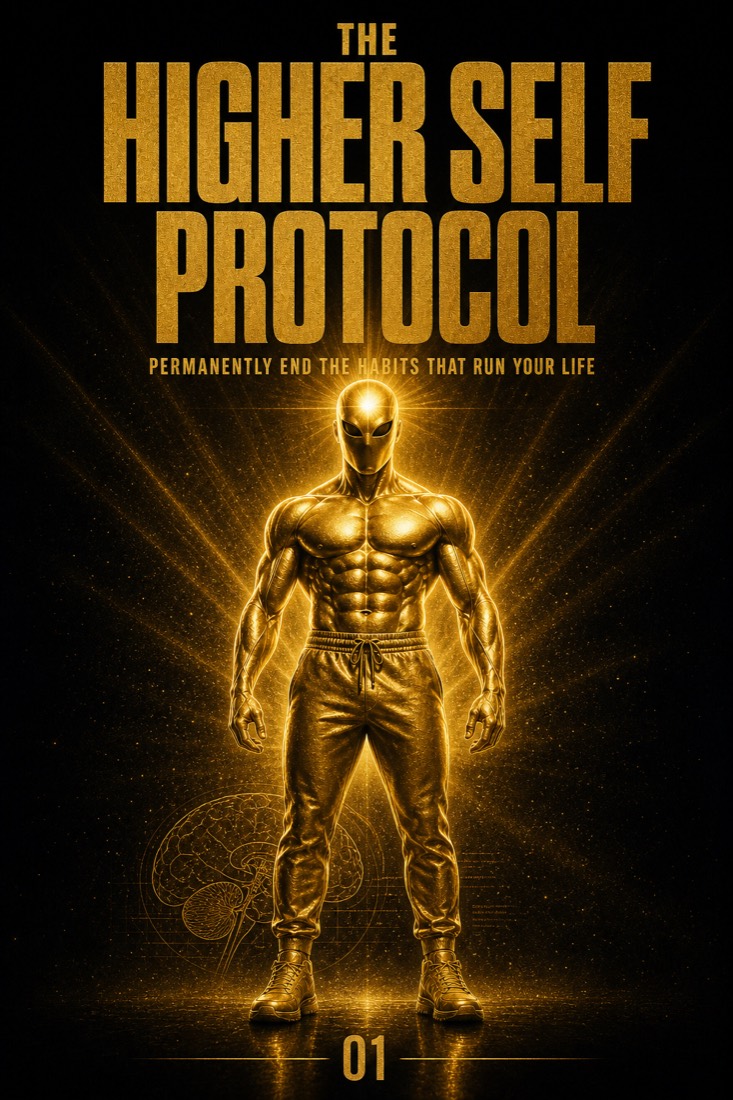
The Higher Self Protocol
$47
The whole mechanism, condition by condition — what each one is, how it's stuck on you, and exactly how to set it. Every claim carries its citation.
The handover, start to finish — what it is and why the fight is the wrong frame
All 5 conditions, with the research behind each
The exact order to set them in — get this wrong and every attempt becomes ammunition
The self-diagnostic — find which condition is the stuck one on you
Guide 02
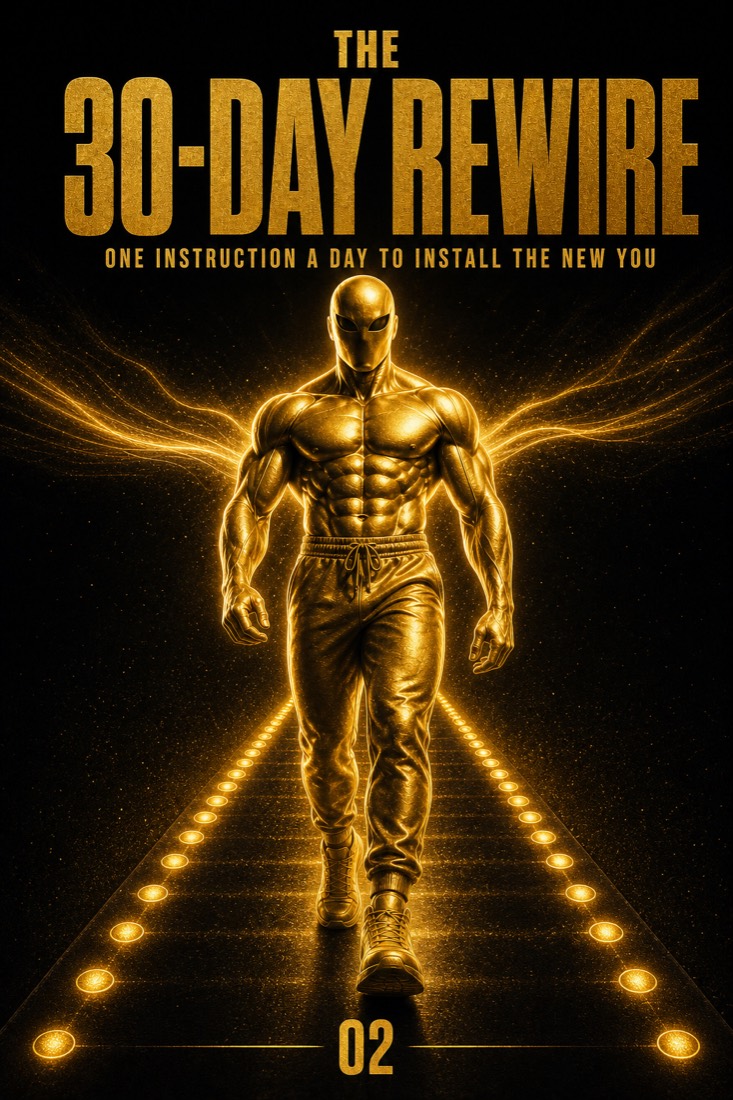
The 30-Day Rewire
$37
One email a day: do exactly this today. Every day is engineered to manufacture a prediction error — the only currency that buys a rewrite. Worth the price on its own.
30 days, one instruction a day, delivered to your inbox
Days 1–7 are built to produce a visible win in the first week
Every day maps to a condition — you always know what you're setting
The one-line log — and it doubles as your refund ticket
Guide 03
The Battlefield Audit
$27
Find the exact triggers that fire YOUR habit — the chair, the hour, the app, the mood — and kill them, so the fight is never scheduled in the first place.
The 72-hour cue trace — find the chain, not just the moment
The upstream test — locate where it was really decided
Context redesign — the habit-discontinuity findings, applied to your actual house
The vacancy problem — what to put in the job the habit was doing
Guide 04
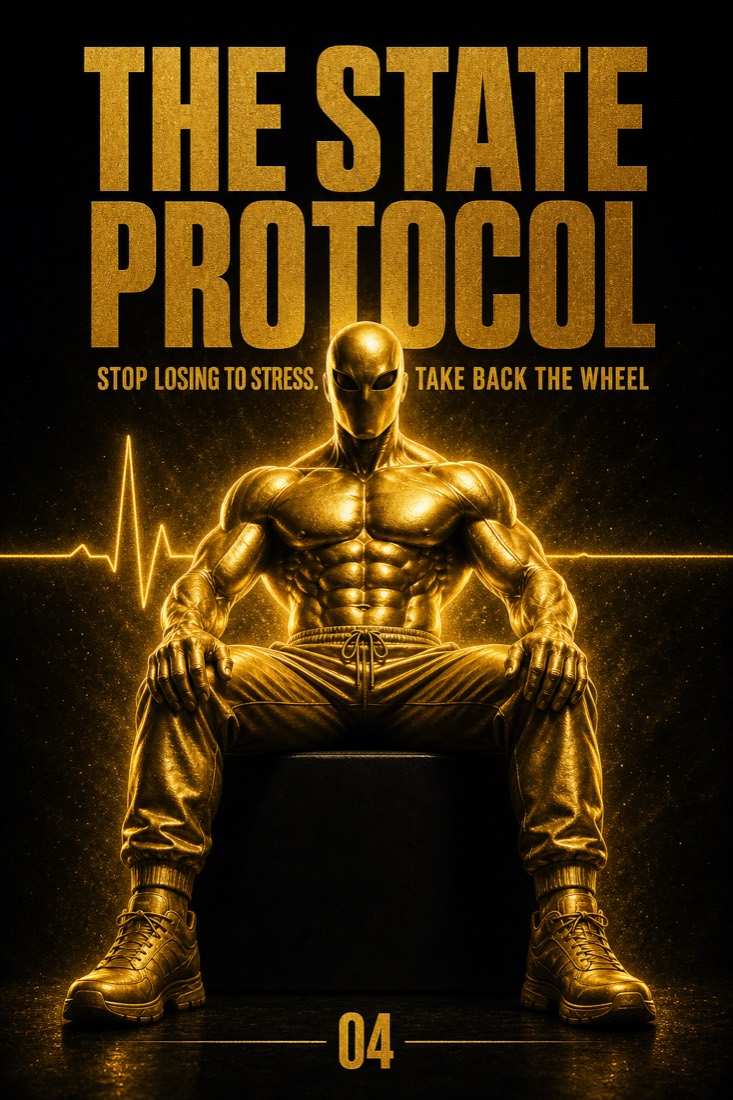
The State Protocol
$19
Nervous-system regulation, in practice. Stress is what hands you over — this is how to arrive at 11pm calm, and how to take the wheel back in two minutes when you don't.
The two-minute recovery — down-regulating on the spot
Sleep as the wire, not as recovery — and the non-negotiable minimum
Training for the prefrontal cortex — why the gym buys two things at once
Tracking it — what HRV is worth, and what it isn't
🎁 Included
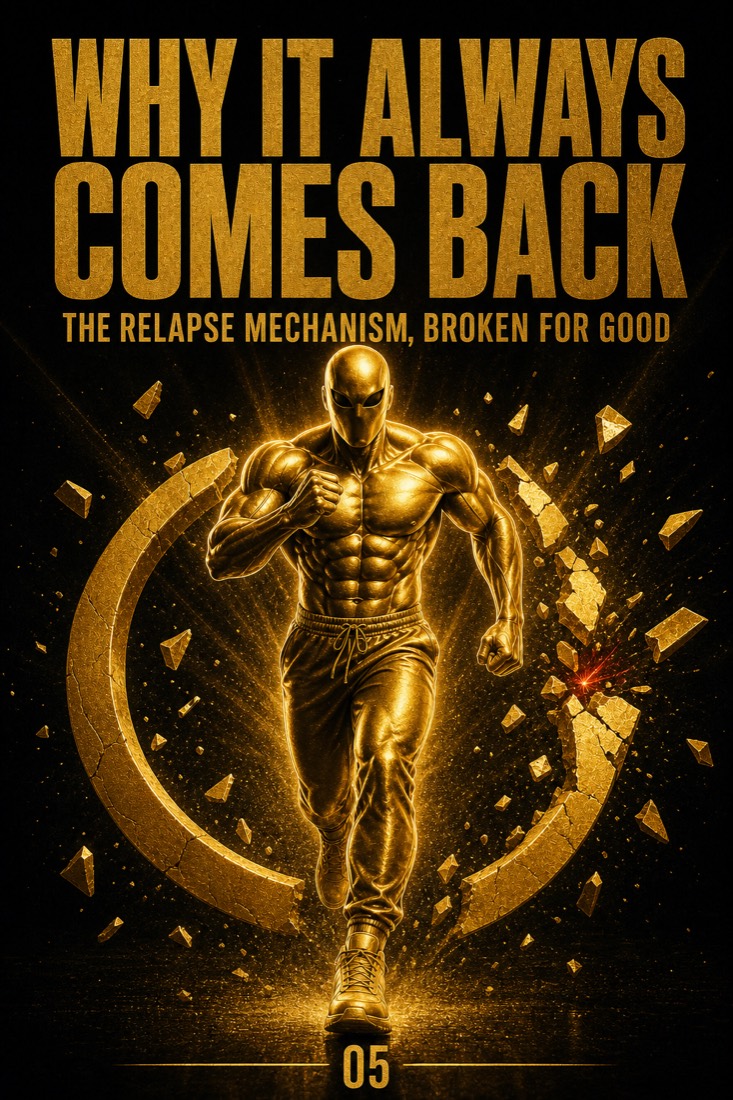
Why It Always Comes Back
$17
The fully-cited version of the ten DON'Ts above — every claim with its source, so you can check the whole thing yourself.
All 10 DON'Ts, each with the study behind it
The relapse mechanism, laid bare — why ninety days can vanish in a weekend
The slip protocol — the 24 hours after, which decide everything
Add it up
The Higher Self Protocol
$47
The 30-Day Rewire
$37
The Battlefield Audit
$27
The State Protocol
$19
Why It Always Comes Back
$17
Total value
$147
Founding price — going up
Here's the actual reason it's this low, and it's the same reason the Protocol works: every day you spend deciding is another day the script runs unopposed. Deliberation is the lower self's best move — it feels like diligence and it functions as delay. So it's priced to be started today, not decided on. That, and I want the logs back: the first men through are the ones who tell me which condition is most often the stuck one. Once I have enough of them, this price goes.
I could charge $147 for this. The five guides are honestly worth it and you'd still be getting a deal. I'm not going to.
$19 is the founding price, and the reason is the product itself. The single most reliable move your lower self has is not temptation — it's deferral. It gets you to close the tab and think about it, because thinking about it feels responsible and costs it nothing. A price you have to deliberate over hands it the win before you've started.
I'd rather you set the conditions once, watch a craving go past you on day fourteen, and trust me with the bigger thing later. This is the founding price. It goes up as the programme grows.
The only promise I'll make you
Run it for 30 days. If nothing's moved, I don't want your $19.
This is the opposite of every guarantee you've been burned by.
Set the five conditions for 30 days — and keep the one-line log I hand you. If you get to the end and nothing has shifted, send me the log. I refund every penny, and you keep all five guides anyway. I'm not asking you to prove it worked. I'm asking you to prove you ran it.
Why the log? Because the one thing that has never worked for you is quitting on day nine — and a refund that costs nothing is a refund you'll take on day nine. So the log is the only condition. It also happens to be the exact mechanism that makes the thing work: self-monitoring is how you catch the handover while it's happening instead of afterwards. The hoop is the treatment.
Which leaves exactly one way to lose here, and it's the thing that has already beaten you several times: not finishing.
Thirty days, logged. Moved, or your money back and you keep the lot. The risk is mine.
I'd rather lose the sale than take money from someone who won't use it.
Don't buy this if what you have is a genuine addiction. If it's threatening your health, your money or your family, you need a professional and possibly a medical one. A $19 download is not the right tool and I won't pretend it is.
Don't buy this if you want it to be permanent and finished. The old pattern doesn't get deleted — it gets outcompeted and then maintained. If "I'll never think about it again" is the requirement, nothing on earth meets it, and I'd rather you were angry at this sentence than at your refund.
Don't buy this if you want to be told what to do without understanding why. Half of this is mechanism, because the mechanism is what stops you re-litigating the plan every time you have a bad week.
Don't buy this if you want to be hyped up. Nothing in here will motivate you. It's a mechanism, explained, with the citations attached. If you need a pep talk to start, a pep talk is what you'll need to continue — and I can't email you one every morning for the rest of your life.
Don't buy this if you won't give it the 30 days. Not because it's hard, but because the conditions don't set in a week. Quit on day nine and you'll add this to the pile of things that "didn't work for you." And that pile is the actual problem.
One more thing, and it isn't a sales tactic
The script gets deeper every time it runs. That's not marketing. It's how the storage works. Every repetition beds it further into the habit system, and every repetition is another piece of evidence feeding an identity that's forming around it whether you're participating or not.
Which means the version of you who starts this today has an easier job than the one who starts in two years — not because of a deadline I've invented, but because he'll be setting the same five conditions against a deeper groove and a better-evidenced story about who he is.
Nothing on this page expires. The groove just doesn't wait for you to be ready.
Still here? Then it doesn't matter whether you've relapsed a hundred times or never made it past a Wednesday. It only ever mattered whether you'd do the work. And you always have — you were just doing it from a position where it couldn't count.
Why would I pay for this when I can just ask ChatGPT?
Ask it. Right now, in another tab. Ask it how to stop a habit you keep going back to.
Whatever it hands you, you have already heard a variation of it. And you didn't just hear it. You ran it. Remove temptation. Build better habits. Be consistent. Consider a dopamine detox. It isn't hallucinating. That's the problem. It's accurately reporting the internet's average opinion, which is the exact body of advice that sold you the detox, the streak counter, the blocker and the shame when none of it stuck. You didn't get a second opinion. You got the first one again, in a more confident voice.
And it will never hand you the order. It'll give you a tidy list of true things. It won't tell you which of the five is the stuck one on you, which to set first, or what to do in the 24 hours after a slip — the window that decides whether the attempt survives. A model can only average what's been written down. The order hasn't been written down. That's the entire reason this costs $19 instead of nothing.
Is this spiritual? "Higher self" sounds like manifestation stuff.
No. And I picked the name knowing exactly what it sounds like, because the term is accurate and I'd rather reclaim it than invent a worse one.
Your higher self has an address: the prefrontal cortex. Planning, consequences, values, the long horizon, and top-down inhibitory control over the structures below it. Your lower self has an address too — the amygdala and the basal ganglia. Threat detection and the stored script. Fast, tireless, much older, and completely uninterested in next year.
There's no energy, no vibration, no universe delivering anything. There is a documented control hierarchy in your head, a measurable set of conditions under which the top of it stops driving, and a body of research on how to change that. That's all "higher self" means on this page, and it's stated that plainly inside the guides too.
I've already tried NoFap / cold turkey / a dopamine detox. Why is this different?
Because those are all the same move: removal, powered by willpower, with the other four conditions left completely unmanaged. Cold turkey, hard mode, the ninety-day reboot — removal is real, and it's one part of one condition.
And the detox specifically was built on a model of dopamine that's wrong: it isn't a tank you drain and refill, it's a prediction signal, and there's no evidence a detox resets anything. That's not a small correction — it's why those attempts kept collapsing at week two and taking your self-belief with them. You weren't failing a good method. You were running a method built on a mechanism that doesn't exist.
My problem isn't porn. It's my phone / weed / the bets / eating at night.
Then it's the same mechanism and the same five conditions. The PMO loop, the feed, the vape, the bets, the fridge — the machinery isn't content-specific. A cue fires, a script runs, a state decides whether anything can override it, and a prediction gets set about what normal feels like.
The escape hatch is interchangeable. That's actually why swapping one for another feels like progress for about three weeks and then doesn't. You changed the exit. You didn't change the conditions that send you looking for one.
I've broken it before and it came back. Why would this hold?
Because you now know the thing you didn't know then: the clean run never deleted anything. It built a new layer over an old one that stayed fully intact, and under stress the old one came back — which is exactly what the research says happens, and it wasn't a comment on your seriousness.
What holds a new layer is maintaining the conditions that let it win, plus knowing what to do in the 24 hours after a slip — the chaser window — so it costs you a day instead of the whole attempt. Last time you had the effort and none of the mechanism. That's the difference.
What do I get, and when?
All five guides instantly on checkout. The 30-Day Rewire then arrives as one email a day for thirty days — because a PDF about consistency isn't consistency.
Do I need a gym?
It helps more than you'd expect, and not for the reason you'd guess. Training is the highest-yield prediction error available to you: it violates the script directly, it's supposed to be uncomfortable so discomfort stops reading as danger, and it raises BDNF — which preferentially supports the prefrontal cortex, the exact structure that has to hold the wheel. It buys the rewrite and strengthens the driver in one transaction. But the other four conditions don't need one, and the Protocol gives you a no-gym route.
How long does this take each day?
The daily instruction takes a minute to read and about ten minutes to do. Most of it is things you're already doing — at a different hour, in a different order, or in a different state.
I'm in my forties. Is it too late to rewire?
No. Plasticity doesn't switch off. The mechanism that writes new learning is prediction error, and that runs for life. What is true: you've got a deeper groove and a longer evidence trail feeding the identity, so the Anchor takes more feeding. That's a longer runway, not a closed door.
You already know what to do. You've always known. That's the humiliating part.
You don't need another program telling you to want it more. You did want it. You wanted it at 9am when you made the promise, and you meant every word. Then at 11pm somebody else was driving. And somewhere in there you concluded the problem was you.
It wasn't. Control was handed over before you got a vote, by conditions nobody ever taught you to look at. That was never a character flaw. It's a mechanism. And mechanisms can be set.
P.S. If you're still reading, you're doing the exact thing we just spent this whole page on — deliberating. It feels like being careful. It's the lower self's best move, and it has never once lost with it. You're not deciding whether to spend $19. You're deciding whether to spend another year exactly like this one.